Description
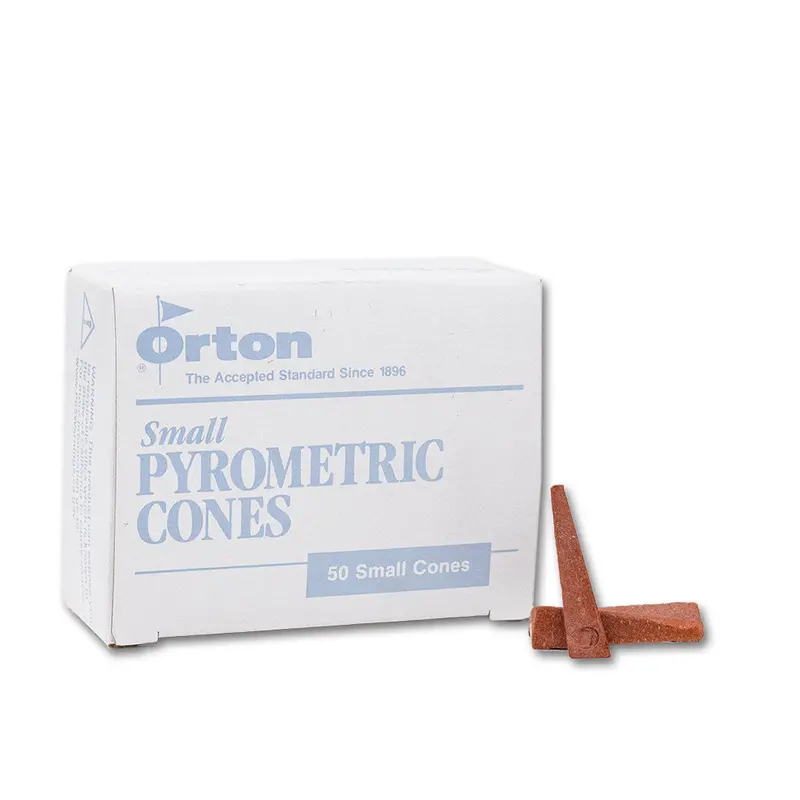
ORTON SMALL CONES – 6 : Box of 50
Orton cones, pyrometric cones or witness cones are for accurate kiln firing. Order online from Sheffield Pottery Ceramic Supply.
Orton Pyrometric Cones for Ceramic Arts
|
. | |||||||||||||||||||||
|
Orton also provides a computer program to relate bending behavior of cones to temperature, heating rate and hold time. Large and Self-Supporting cones are used as witness cones to monitor the firing and verify temperature uniformity. Also see the Orton Cone Chart for temperature equivalent tables and Charts for converting cone bending angle to temperature. |
||||||||||||||||||||||

Orton Cone Temperature Equivilancies Download and Print the Complete Orton Cone Wall Chart… Here.
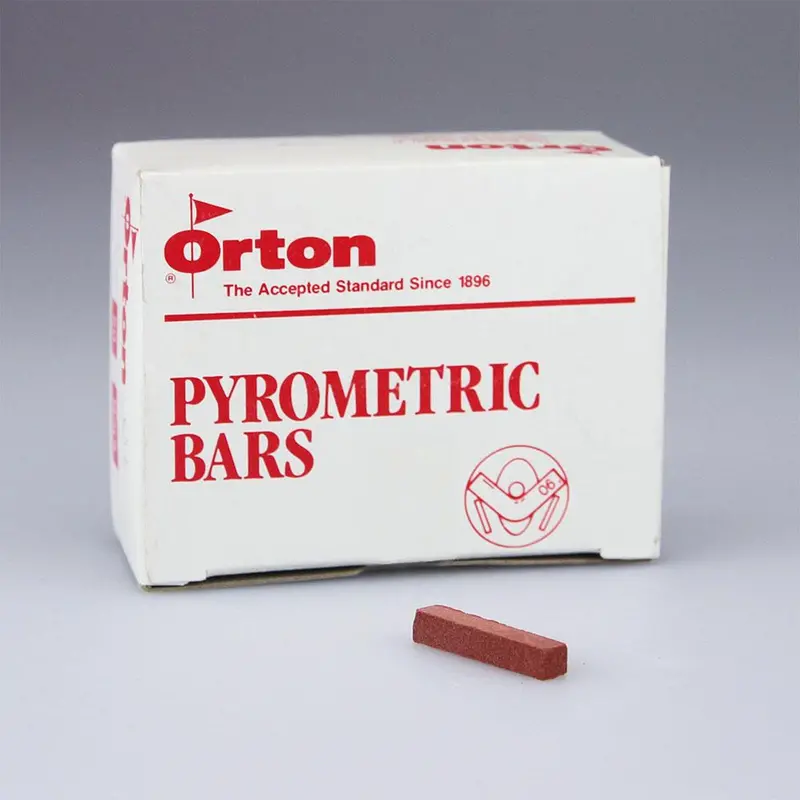
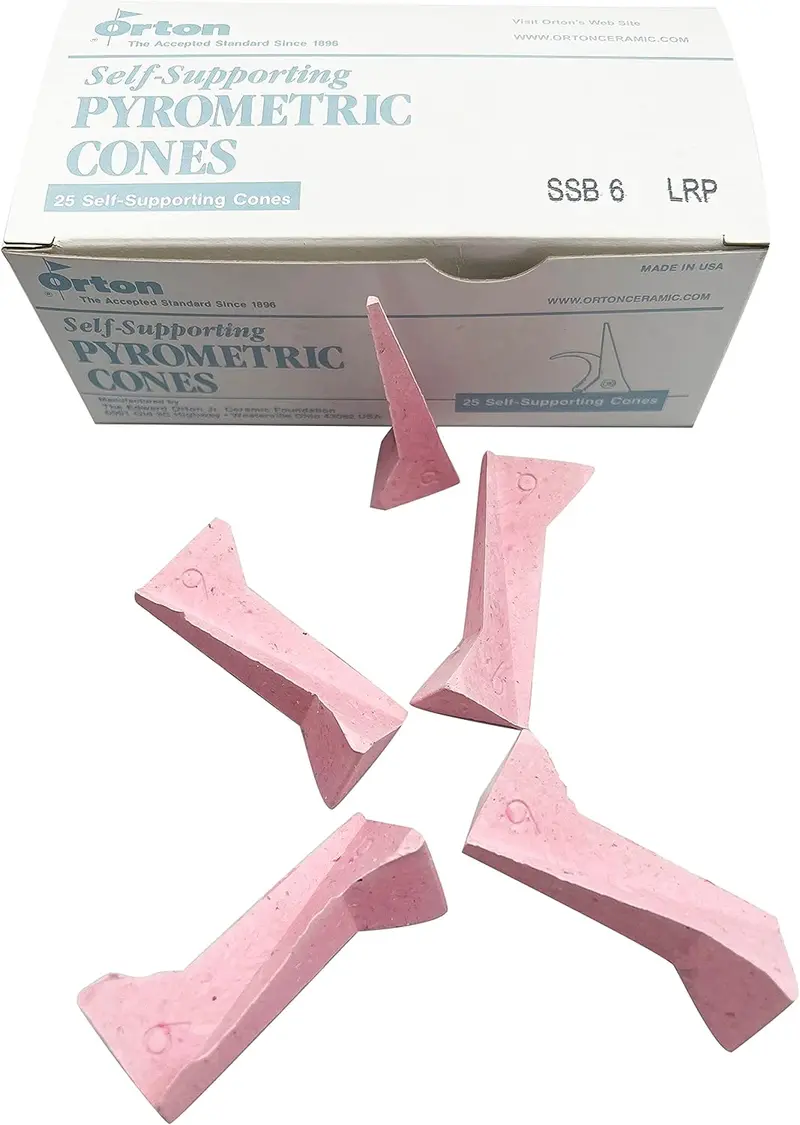
Orton manufactures four different types of cones (Small cones, Bar cones, Large cones and Self-supporting cones).
The Large and Self-supporting cones are used to measure temperatureuniformity and/or if there was sufficient heatwork done to mature theware. Cones indicate whether the ware received an adequate amount ofheatwork to properly mature the clay or glaze. A properly fired conewill bend over with the tip of the cone almost touching the shelf.After firing a kiln, a simple glance at the cone can tell if the firingwas sucessful.
The small and bar cones are mainly used in the kiln shut-off devicecalled the Kilnsitter. This is a mechanical device that shuts off thekiln when the temperature inside is sufficient to cause the cone todeform under the weight of the Kilnsitter rod.
The only true measurement of heatwork is from a Large or Self-supporting cone placed on the shelf next to the ware.
CONENUMBERS – Orton makes cones from cone 022 up to cone 42. Cone 022 isthe lowest melting cone and requires the least amount of heat to deformor bend. During firing, a cone softens and melts as it is heated. Conesused on the kiln shelf bend due to the effects of gravity pulling thetip down. This bending indicates the cone and the ware have received aspecific amount of heat. It typically takes 15 to 22 minutes for conesto bend fully once they start bending. Each higher cone number requiresmore heat to bend. A cone 01 needs less heat treatment than cone 1 andcone 020 needs less than 019.
It is important not to confuse thelower maturing cones and bars, whose numbers begin with an 0, with thehigher cones and bars not containing this prefix.
Although cones do not actually measure temperature, cone bendingbehavior and temperature are related. Generally, the faster the firing,the higher the temperature required to bend the cone and the slower thefiring, the lower the temperature required to bend the cone. The 6o’clock position (90 angular degrees) is considered the end point ofcone bending.
Explore more from our collection.
Reviews
There are no reviews yet.